Service Member Custody Planning in a Virginia Military Divorce
Learn how deployment, parenting schedules, communication, and court orders can affect custody planning for service members divorcing in Virginia.
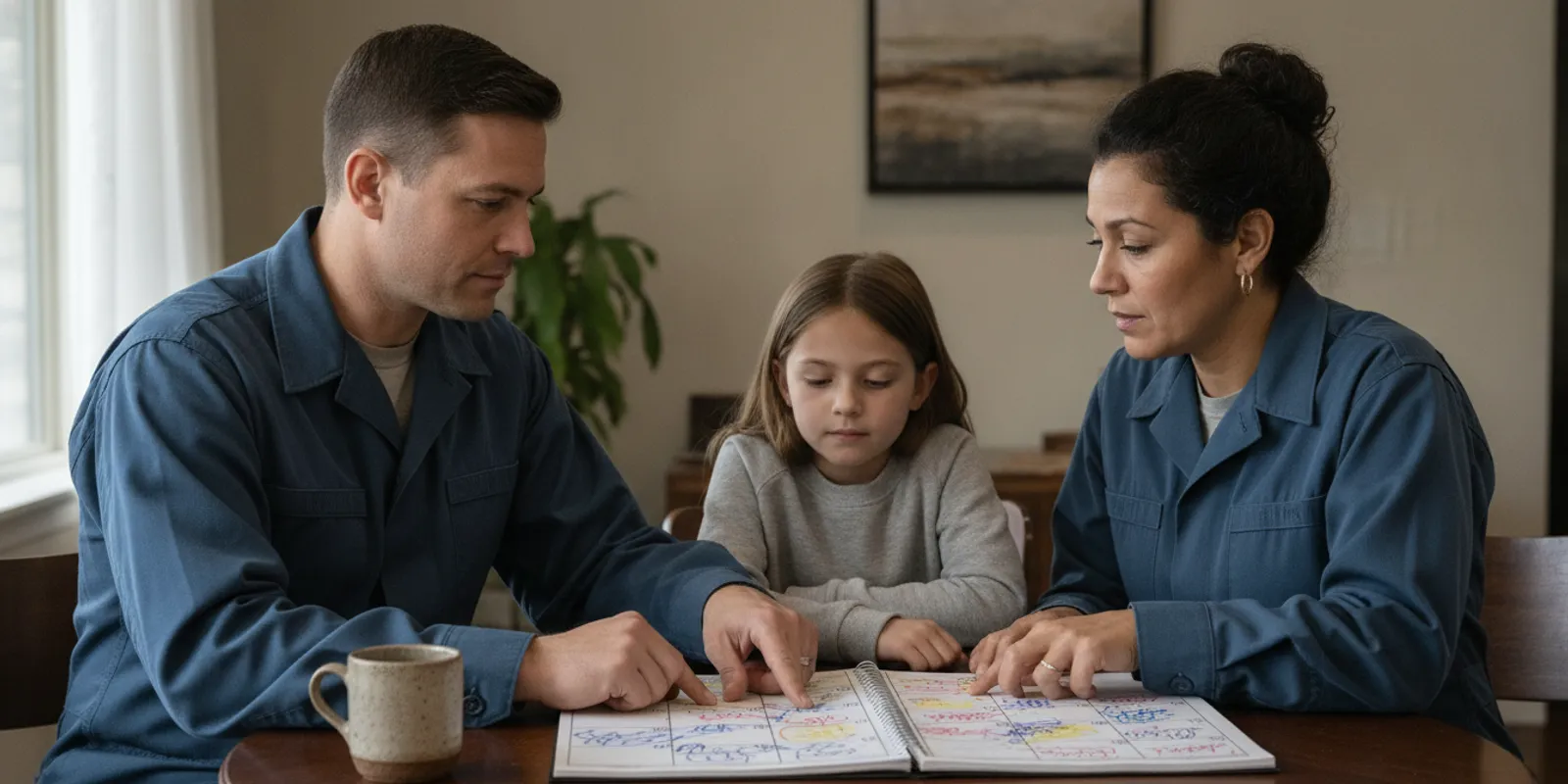
Service member custody planning during a Virginia military divorce involves more than choosing weekends and holidays. Deployment, training, transfers, and unpredictable duty schedules can affect how parents share time and make decisions. A clear plan can help a child maintain meaningful relationships with both parents while accounting for real military obligations. This guide explains the issues to organize and the questions to raise with a Virginia family-law attorney.
Request a free initial consultation
Why does military service change the custody-planning conversation?
Military service can create periods when a parent is away, has limited control over a schedule, or receives orders with little notice. A parent may be stationed far from the child, attend training, deploy, or return on a timeline that changes. Those circumstances matter when building a practical parenting arrangement, but they do not answer the custody question by themselves.
Virginia custody decisions focus on the child’s best interests. A court looks at the circumstances of the child and each parent, not a simple rule that a military parent is either favored or disqualified. The practical question is how each parent can meet the child’s needs and support the child’s relationship with the other parent, including during a period of absence.
Military service also affects planning in ways that a generic schedule may not address. A plan might need a process for notice of orders, a temporary caregiver, regular contact from a distance, and a transition when the service member returns. These are distinct from other parts of a Virginia military divorce. Keeping custody terms specific helps parents discuss the child’s routine rather than relying on assumptions about military life.
What does Virginia consider when deciding custody?
Virginia courts decide custody and visitation based on the child’s best interests. Relevant considerations include the child’s needs, each parent’s relationship and past involvement with the child, each parent’s ability to meet the child’s needs, and the parents’ willingness and ability to support the child’s relationship with the other parent. The facts of a particular case matter. A parent’s service status alone does not tell the full story.
For a service member, useful context may include how often the parent has been the child’s caregiver, the child’s current home and school routine, the likely length and nature of an absence, and the steps proposed to keep the relationship consistent. A judge may need to understand what a proposed schedule would look like in practice rather than just the labels “custody” or “deployment.”
It can help to distinguish a parent’s ability to be physically present from that parent’s commitment and capacity to parent. Some duties require absence; other periods may allow substantial time with the child. A realistic proposal acknowledges both. It should not assume the service member can always take leave, control orders, or travel on a particular day. Nor should it assume the other parent can absorb every change without notice or support.
Parents should get legal advice about how Virginia law applies to their facts and any existing order. A child’s established home, the history of care, safety concerns, and the exact military circumstances can affect what a court considers. A general article cannot predict a custody result or replace advice about an individual case.
How should parents plan for deployment or other absences?
Start with the likely event, not a vague statement that one parent may be away. A deployment differs from a short training period, temporary duty, or a permanent change of station. The length, notice, location, communication access, and likely return date may differ. A useful proposal describes what can reasonably be known and gives the parents a process for details that are not known yet.
Write down the facts available: anticipated timing, expected duration if known, the child’s school and care arrangements, and any limits on calls or travel. Do not promise a precise return date if orders can change it. If orders have not been issued, identify that uncertainty plainly. A plan built around confirmed facts is easier to evaluate and update than one built around a worst-case assumption.
Consider these practical questions:
- How will a parent give notice of an absence or schedule change, and through what method?
- Who will care for the child during the other parent’s scheduled time if that parent is away?
- How can the service member and child stay in contact, taking account of time zones, connectivity, and the child’s age?
- What information should the parents share about school, medical needs, activities, and significant events?
- What happens if orders change, the parent returns earlier or later than expected, or communication is temporarily unavailable?
- How will the child return to the ordinary schedule after the service member is available again?
Where possible, propose steps in sequence. The service member can provide notice when orders become known; the parents can confirm the immediate care arrangement; they can set a regular time for remote contact when practical; and they can revisit the schedule after the service member’s return. These are planning concepts, not a one-size-fits-all legal formula. The wording should fit the child and any court order.
Parents should avoid making the child responsible for carrying messages, negotiating changes, or reporting on the other parent. Share necessary logistics adult-to-adult. A child may be told an age-appropriate explanation about a parent’s absence, but should not be asked to choose sides or manage the adults’ disagreement.
What is a family care plan, and is it a custody order?
A military family care plan is prepared to address care for a service member’s family during certain periods of absence or unavailability. It serves a military readiness purpose. It is not automatically the same thing as a Virginia custody order, and it does not by itself resolve a dispute between parents about legal custody or visitation.
A service member may have identified a caregiver for military planning, but a parent’s custody rights and the child’s living arrangement still need to be addressed under applicable family law and any court orders. Similarly, a civilian parent should not assume that a military document changes an existing custody order without the necessary legal steps.
Military OneSource’s child custody information for military families discusses custody considerations and family care plans. It can help identify military-related questions, but it is not a substitute for advice about a Virginia order or a particular dispute.
If a caregiver is proposed, consider the child’s relationship with that person, the person’s availability, location, transportation to school and activities, and how the parent will remain involved. Also consider whether the other parent may be able to provide care during that time. Do not assume that a relative or other caregiver can take over a parent’s legal role just because they are named in a family care plan.
How can parents make a parenting schedule workable?
A workable plan should be specific enough to guide both parents, but flexible enough to address changes that neither can control. It should describe the ordinary schedule when both parents are available, then explain how the schedule is handled during a known absence. If the plan only says that the parents will “work it out,” it may not help when communication is difficult or the parents disagree.
How are legal custody and parenting time different?
Parents often use “custody” as if it refers to one decision, but custody discussions can involve different questions. One is how parents share responsibility for important decisions affecting the child. Another is where the child lives and when each parent has parenting time. A military absence may affect the practical schedule without automatically answering how decision-making should work.
When parents discuss decision-making, consider how they will share information and handle choices about education, health care, and other significant matters. A service member who is away may still want to participate, but access to a phone or secure connection may be limited. A plan can identify how routine notices are shared, how urgent decisions are communicated, and what to do when a response is needed before the absent parent can be reached. Ask counsel how those terms fit an existing order.
Parenting time calls for different practical details: the child’s residential schedule, exchanges, holidays, and contact during a parent’s absence. It may be useful to state a normal schedule separately from a temporary schedule for deployment or training. That way, a temporary period is not confused with a permanent change to the underlying arrangement. Whether and how a court order should distinguish these issues depends on the case.
Neither parent should assume that a short period of care by a relative or trusted adult decides who has legal custody. Nor should the service member assume that a parent who cares for the child during deployment is agreeing to give up future parenting time. Put the temporary nature of an arrangement in clear writing, and ask an attorney whether formal court action is needed.
How can the plan account for different kinds of absence?
Not every absence calls for the same response. A few days of training may be manageable under the ordinary schedule, while a long deployment can affect school breaks, exchanges, and the child’s regular contact with the service member. A permanent transfer may change distance and travel needs for the foreseeable future. Describing categories can be more useful than writing a separate rule for every possible assignment.
Parents can discuss which changes require advance notice, what information should be shared when available, and how to address an unexpected duty requirement. For a predictable event, they may have time to agree on a temporary schedule in advance. For a sudden change, they may need a brief process for notifying each other, protecting the child’s routine, and reviewing the arrangement when facts become clearer. The process should not require disclosure of information that cannot properly be shared, but it should give the other parent enough practical information to care for the child.
Ask what happens when an event lasts longer than expected. Is there a date to review the plan? How will the parents decide whether the child should remain in the same school and care arrangement? What if the parent returns during a school term rather than a holiday? A plan with review points can reduce uncertainty without pretending schedules never change.
Consider the child’s developmental stage. A young child may need frequent, predictable contact and familiar caregivers. A teenager may have school, activities, work, and social commitments that make a long-distance schedule more complicated. The child’s views may be relevant depending on age and circumstances, but parents should not put the child in the position of choosing which parent is right. Ask an attorney about the child’s participation in a court process.
What makes communication dependable during an absence?
Communication plans work best when they are realistic. A fixed video-call time may be difficult across time zones or during a field exercise. A flexible window, paired with a way to reschedule, may be more workable. Parents can distinguish ordinary contact from urgent communication about health, school, or a schedule change. They can also agree on a backup method when a call cannot connect.
Keep the child’s experience in mind. Contact should suit the child’s age and routine, not serve as a test of the service member’s affection or a way to monitor the other parent. A missed call may reflect duty, poor reception, time-zone differences, or the child’s schedule. Parents should avoid turning each disruption into a new conflict. If a recurring problem develops, record the facts and seek a constructive solution.
Parents can agree on practical boundaries: whether a parent calls the child’s device or the caregiver’s, who initiates a call, what happens if the child is asleep or at school, and whether an adult helps the child prepare. If the child is too young to manage a device, the caregiver may need to facilitate contact. If the child does not want to participate at a particular moment, the adults should handle that calmly and consider whether the broader pattern needs attention.
For shared information, choose a method the parents can access and use consistently. Keep messages short and focused on the child. A calendar may help track dates, but it should not replace required notices or legal documents. If communication is unsafe or subject to restrictions, follow the order and get legal advice about an appropriate channel.
Think through the child’s ordinary week before proposing a different one. Include school times, transportation, childcare, recurring appointments, activities, and sleep routine. If the service member’s schedule changes, identify which parts can remain steady and what may need to change. Keeping familiar routines where possible can make transitions easier.
Parents may want to discuss regular residential time, notice and confirmation, remote contact, transportation, school and health information, transitions after a long absence, and a process for proposed changes or disagreement. Ask which days and overnights are realistic when the service member is available, how weekends and school breaks will work, who handles exchanges, and how parents can keep each other informed. A gradual return to the ordinary schedule may or may not suit the child; consider the circumstances rather than assuming one method applies to every family.
A planning table can help identify what needs an answer. It is a discussion aid, not a custody order or legal recommendation.
| Planning issue | Questions to answer | Information to gather |
|---|---|---|
| Ordinary schedule | What supports the child’s routine when both parents are available? | School calendar, duty schedules, caregiving history, activities |
| Temporary absence | Who cares for the child, and how does the other parent stay involved? | Orders or anticipated dates, caregiver availability, contact limits |
| Communication | How will parents share updates and arrange child contact? | Preferred method, time zones, school and medical contacts |
| Return and adjustment | How will parents review the schedule when the service member returns? | Return information, child’s needs, travel and school commitments |
| Disagreement | What if parents do not agree on a proposed change? | Current order, written communications, questions for counsel |
Parents should be careful about unilateral schedule changes. An urgent military event may require immediate practical decisions, but that does not mean every change permanently alters a court-ordered arrangement. Keep a record of proposed changes and agreements. If an emergency prevents following the existing schedule, communicate as soon as practical and ask an attorney how to address the order.
What if the service member is stationed far away?
A move can affect parenting time and the legal process. The service member may be assigned elsewhere, or the child may live with a parent who relocates. A new duty station does not automatically settle which court has authority or change the existing order. Jurisdiction can depend on the child’s circumstances and applicable law, so get advice before assuming a move transfers a case to a different state.
When parents live far apart, the plan may need fewer but longer periods of in-person time, school breaks, and travel arrangements. The right arrangement depends on the child’s age, school calendar, distance, cost, parent schedules, and any safety or other case-specific concern. Avoid setting travel terms that depend on leave or transportation that has not been confirmed.
Consider who arranges transportation, who accompanies a young child, what happens if travel is disrupted, how parents exchange itinerary information, and how to handle an emergency. A clear plan should account for school responsibilities and timely return. Discuss whether travel costs and responsibilities should be allocated instead of leaving the issue open.
Remote contact can supplement in-person time, but it is not automatically an equivalent replacement. The child’s age, communication access, and quality of interaction matter. A short, reliable call may work better than a long call at an inconvenient hour. If connectivity is unreliable, parents can discuss other appropriate options, such as messages or letters.
If a move may affect the child’s home or schooling, address that separately from the service member’s duty station. Give notice as required by an order or applicable law. Do not assume that a move is permitted simply because a parent received new orders. A move can create legal and practical questions that deserve prompt review.
How should parents handle an existing custody order?
Read the order as written. Identify the current schedule, exchange terms, decision-making provisions, notice requirements, travel rules, and any language about relocation or temporary care. Do not rely on a memory of what was said in court or a shorthand description such as “we share custody.” The signed order and later modifications are the starting point for understanding what each parent is expected to do.
Compare the order with the military facts. Is the absence covered by a provision? Does the order say how notice must be given or identify a process for changing the schedule? Are expected dates certain or tentative? This comparison can show whether parents need to clarify how the order applies, agree on a temporary adjustment, or ask a court to address a change. An attorney can review the language and advise what action is appropriate.
Keep a copy of every operative order and preserve the full document, not only selected pages. If an order was entered in a different state or the family has moved since it was entered, mention that early when seeking advice. A lawyer may need to consider the order’s history and which court can address it before discussing the proposed change.
Do not treat a text message, family care plan, or short-term accommodation as if it automatically rewrites a court order. A parent may agree to a practical temporary change, but the legal effect depends on the situation and order. When parents agree, state clearly what is changing, for how long, what remains unchanged, and when the plan will be reviewed. Ask counsel whether the agreement should be presented to a court or formalized another way.
If a parent believes the other is not following the order, save relevant communications and note dates and effects on the child. Avoid escalating through threats, public posts, or messages sent through the child. An attorney can help distinguish a misunderstanding, an emergency, and a repeated problem that may require formal attention. If there is immediate danger to the child, seek emergency help from appropriate authorities and urgent legal advice.
What if the child’s home or school may change?
Relocation raises questions separate from whether a service member can deploy. A parent may receive orders that change where the parent is stationed while the child’s home remains with the other parent. Alternatively, the parent who has the child’s primary home may consider moving. Either circumstance can affect travel, school, the ordinary schedule, and the court’s ability to address custody. Do not assume military orders alone authorize moving a child or changing the child’s residence.
Before a proposed move, review the existing order and identify notice or permission requirements. Consider lead time, whether the child would change schools or caregivers, what contact with each parent would look like, and whether travel is realistic during the school year. A parent who receives orders should share relevant practical information as soon as permitted and seek advice promptly. Waiting until after a move can make a difficult situation harder to resolve.
In some families, the child’s home state or the court that entered an order remains important after a parent relocates. Jurisdiction rules can be technical and fact-specific. A child’s presence in a new state does not necessarily mean a new court can immediately replace the existing court. Get advice before filing in a new place or assuming an assignment changes where a custody dispute must be handled.
When a move is not immediate, compare realistic alternatives: the schedule before and after the move, travel frequency, holiday allocation, exchange locations, remote contact, and transportation responsibility. Consider travel time and cost without assuming one parent can always take leave or absorb every expense. A child-focused proposal explains how the relationship with each parent will be supported rather than treating relocation as only an adult scheduling issue.
If a move is required on a short timeline, gather orders and dates, review current custody documents, and seek advice quickly. Keep the child’s school and care needs central. Do not ask the child to make the decision or carry messages. The legal options depend on the existing order and family circumstances; no generic move-away schedule fits every family.
How can parents reduce disruption for the child?
Parents cannot control every military schedule, but they can often reduce avoidable uncertainty for a child. Explain an absence in age-appropriate language, share what is known without promising a date that could change, and reassure the child that adults are handling arrangements. Children may react differently: one may ask questions, another may seem unaffected, and another may show stress through sleep, school, or behavior. Do not interpret one reaction as proof of what custody arrangement should be.
Keep ordinary routines where possible. Regular school attendance, familiar caregivers, activities, and predictable transitions can give the child continuity during a parent’s absence. If routines must change, tell the child what will happen next in simple terms. Parents can share relevant observations without turning the child into evidence or asking the child to report on a parent’s household.
Consider whether a proposed caregiver can maintain the child’s ordinary needs, including transportation, medication routines, school contacts, and activities. Discuss who can access school and health information and how each parent will receive updates. A caregiver may need practical authority for daily tasks, but parents should obtain legal advice about appropriate consent forms or documents. Do not assume an informal note grants authority for every medical, educational, or legal decision.
If the child appears to need additional support, parents can ask a qualified professional about appropriate help. The choice should account for the child’s needs and any court order governing decisions. Avoid using counseling or another service as leverage in a custody disagreement. Keep communication respectful and focused on the child’s well-being.
How should parents document changes and communication?
Good records help parents remember what they agreed and when they learned about a change. They can also help an attorney understand a timeline if a disagreement later needs attention. Keep records factual and organized. A custody file does not need to become a running argument about the other parent.
Save copies of relevant orders, written parenting agreements, schedules, notices about orders or training, and communications about changes. Record dates and practical effects, such as a missed exchange or a contact attempt that could not happen. Avoid exaggeration, commentary, or conclusions about motive. Do not ask the child to create evidence or relay adult messages.
For a proposed adjustment, make the request clear: what change is needed, when it would begin and end if known, why it is needed, and how the child’s routine and the other parent’s contact will be handled. If the change is temporary, say so. If circumstances remain uncertain, describe what is known and when parents can check in again.
Written agreement may help avoid confusion, but it is not always a substitute for a court-approved change to an existing order. Before relying on an informal agreement, ask an attorney whether it is sufficient and how a change should be documented. Keep following the current order unless it is changed or an emergency requires immediate action; seek prompt advice about the right response when you cannot comply.
What if parents disagree about deployment-related custody?
Begin by identifying the exact disagreement. Is it about who will care for the child during an absence, how much contact can occur, whether a temporary schedule will begin, travel, or what happens after return? Separating issues can make a conversation more productive than arguing over a broad label such as “custody.”
If communication is safe and practical, share concrete information and propose a child-focused arrangement. Give the other parent a reasonable opportunity to respond, especially when a change is not immediate. Keep discussion focused on logistics and the child’s needs. If there are threats, coercion, or safety concerns, do not rely on informal discussion as the only response; get appropriate legal guidance.
When an order is in place, do not assume deployment automatically cancels or changes it. Nor should a parent assume agreement to a temporary arrangement permanently changes legal custody. A material change may require a formal legal process. An attorney can review the order, facts, and options before a parent takes a step that could create a new dispute.
If there is no order, parents may still benefit from advice before making a major move or relying on an informal arrangement. The child’s established routine and each parent’s rights can matter. Do not use self-help, conceal a child, or interfere with the other parent’s contact without legal advice, except where immediate safety requires urgent protective action.
What should a service member gather before seeking legal advice?
Preparation makes an initial conversation more focused. You do not need to resolve every issue before asking for guidance. Gather what is available, flag what is uncertain, and identify decisions that may need attention soon.
- Any current custody, visitation, or support orders and written agreements.
- A calendar of the child’s routine, including school, childcare, medical appointments, activities, and exchanges.
- A brief history of each parent’s caregiving responsibilities and the child’s relationships with important caregivers.
- Known or anticipated orders, training dates, transfer information, leave limitations, and details that remain unconfirmed.
- A proposed temporary care arrangement, including the caregiver’s location, availability, and relationship with the child.
- Examples of how the service member and child could maintain contact, including likely time-zone or connectivity limits.
- Relevant communications about the schedule, proposed changes, and attempts to resolve the issue.
- Questions about what to do if orders change, an absence lasts longer than expected, or parents cannot agree.
Keep sensitive records secure and share them through appropriate channels. A lawyer can explain which documents are useful and how to handle confidential information. Do not send private records to an unfamiliar address or assume that an online form is privileged.
For a Virginia Beach or Hampton Roads matter, a consultation can help identify next steps based on the current order, the child’s circumstances, and the service member’s schedule. B. Clay Chick PLC provides family-law guidance in the region, including child custody and visitation. The appropriate advice depends on the specific facts.
Contact the firm to discuss your situation
Frequently asked questions
Can a Virginia court deny custody because a parent is in the military?
Military service alone does not determine custody. A Virginia court considers the child’s best interests and the circumstances of the family. The parent’s caregiving history, the child’s needs, expected absences, and proposed arrangements may be relevant. No article can predict how a court will decide an individual case.
Does deployment automatically transfer custody to the other parent?
Do not assume deployment automatically changes a custody order or permanently transfers legal custody. The current order and applicable law matter. A temporary care arrangement, family care plan, and court order serve different purposes. Ask a Virginia attorney how to address the particular order and deployment situation.
Can a family care plan name a caregiver instead of the other parent?
A family care plan addresses military readiness and care during a service member’s absence. It does not automatically decide the other parent’s custody rights or replace a Virginia custody order. A proposed caregiver’s role should be considered alongside the existing order, the child’s needs, and applicable law.
What happens if orders change after parents agree on a schedule?
Notify the other parent as soon as reasonably possible, share confirmed information, and propose a practical adjustment focused on the child. Keep a written record. If parents cannot agree or a change conflicts with a court order, seek legal advice rather than assuming the informal schedule controls.
Does moving to another state change which court handles custody?
Not automatically. Which court has authority can depend on the child’s circumstances and applicable jurisdiction rules. A duty station or move by one parent does not by itself answer that question. Get legal advice before relocating a child or assuming a different state can change an existing order.
What is a practical next step?
Start by locating any current order, writing down the child’s ordinary routine, and separating confirmed military dates from possibilities. Then list the decisions that need a response, such as temporary care, contact, transportation, or a court-approved schedule change. This gives an attorney a clearer picture and helps keep discussion centered on the child.
A custody plan should be built around the child’s needs and the family’s actual circumstances, including the parts of military life that may change. Keep agreements clear, avoid promises about schedules outside your control, and get legal advice before treating an informal arrangement as a replacement for an order. Submitting information through a website form does not create an attorney-client relationship or privilege.